
The Memory You Did Not Know You Needed
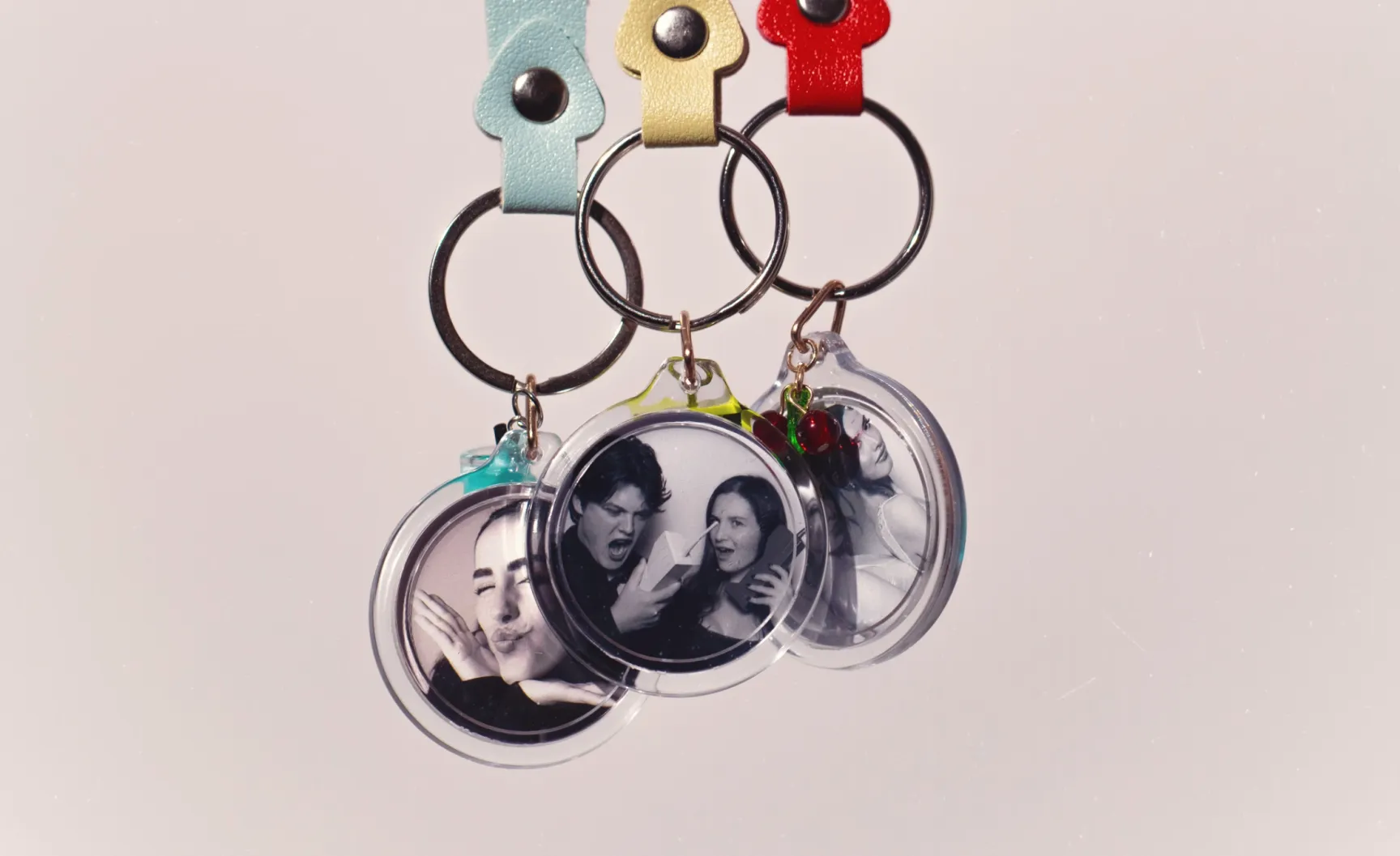
People arrive at events with their phones in their pockets.
By the end of the night those phones hold forty photographs of the same six people, and roughly none of them will ever be looked at again. Not because the night wasn't good — it was — but because a camera roll is where things go to be stored, not where they go to be seen. You have to decide to open it. Nobody decides to open it.
This is the whole reason the keychains work, and we didn't see it coming. We added them as a small extra. They're now the thing people ask about first.
A photograph you have to go looking for is a photograph you have already lost.
What makes an object different is that it doesn't wait to be chosen. It's attached to the keys you pick up every morning, so you see it whether you meant to or not, a few hundred times a year, usually while thinking about something else entirely. That's a very different relationship to a picture than scrolling past it once.
There's a second thing, which took us longer to notice. People give them away. A keychain comes out of the printer and within about a minute someone has handed theirs to whoever was standing next to them in the photo. It stops being a souvenir of your night and turns into a small piece of evidence that the two of you were there together.
We've had people show us keychains from events we worked three years ago, still on the same keys, a bit scuffed. Nobody has ever shown us a photo from three years ago on their phone. They'd have to go and find it first, and by the time they had, the moment for showing it would have passed.
None of which is an argument against taking photos on your phone. Take them. But if you want one image from the night to survive contact with ordinary life, it helps if it has a hole in the top and a ring through it.
People arrive at events with their phones in their pockets. By the end of the night, they leave with something they can hold.
